
[Like any addiction, connection has very quick positive reinforcements and only long-term negative consequences. You get instant pleasure but the negative effects aren’t felt until much, much later, when you’re already firmly addicted. So you get the positive reinforcement immediately, each time you do the addictive activity giving you a pleasure rush and making you want to do the activity again, as soon as possible. You get the positive reinforcement again, and again, and again, in a constant cycle of positive reinforcement, and soon you’re addicted.]

Connection [to the internet] works the same way. When we check email and get a new message, it’s a little bit of validation that we’re worthy of someone else’s attention — we get a little ego boost, a little pleasure from this. When we check Twitter or our feed reader and see something that grabs our attention, that’s a positive reinforcement, a little bit of reward for checking. And so we check again, and again, until we’re addicted.

The Beauty of Disconnection focus

Penso che centri esattamente il punto. Mi sono accorto che a volte rimango su Facebook o Twitter fino a che non trovo qualcosa di interessante, e se non lo trovo subito la permanenza si prolunga, così come l’ansia.

E’ ovvio che è un comportamento stupido disconnettersi da tutto. Bisogna, invece, ri-imparare a trovare dei momenti di tranqullità, dove leggere gli ultimi status update non sia la priorità fondamentale.
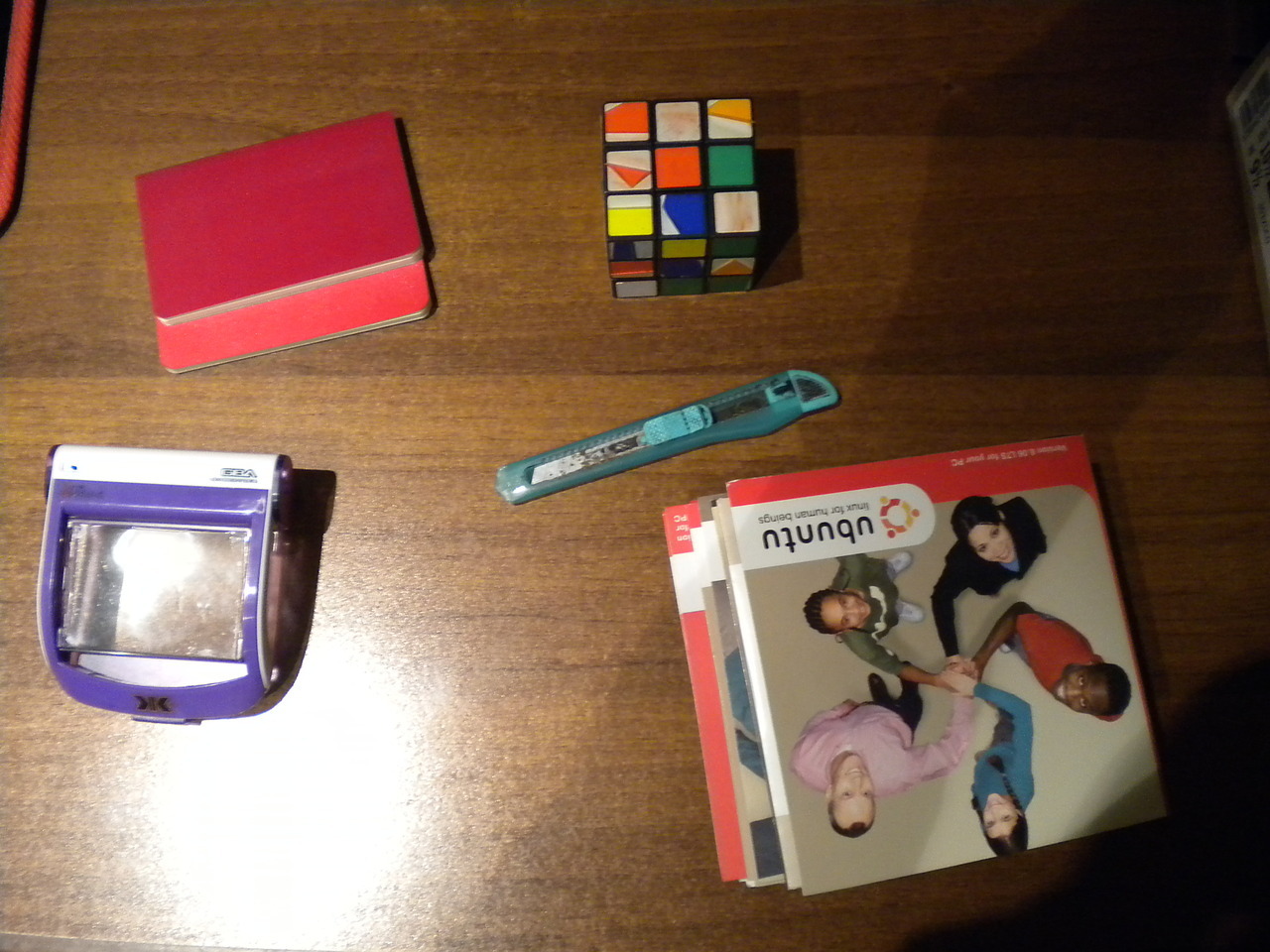

5 Things Challenge, Week One

Dopo aver letto del 10 Things Challenge, mi son deciso a partecipare. La sfida consiste nello scegliere ogni settimana 10 oggetti che non usiamo più e buttarli, così da liberarsi dall’inutile confusione che inevitabilmente creano.

Ho ridotto la sfida a 5 oggetti a settimana (dato che posso “ripulire” solo camera mia vivendo coi miei genitori) e queste sono le mie scelte.

  1. CD di Ubuntu che mi son fatto inviare ogni volta che usciva una nuova versione. Ho tenuto solo il più vecchio per ricordo, gli altri li butto. Tra l’altro ora uso OS X.
  2. Un trincetto semi-distrutto.
  3. Un cubo di Rubick semi-distrutto che comprai dopo aver visto un video che mi spiegava come risolvero. Non ho mai imparato seriamente.
  4. Una cover protettiva per il GameBoy Advance. Ho tenuto il GameBoy, questa sicuramente non ha alcun valore, né monetario né affettivo.
  5. Due affarini per segnarsi le cose. Ora ho l’iphone e non scrivo quasi più nulla su carta.

Sicuramente non sentirò la mancanza di questa roba, così ho liberato spazio ed è tutto meno disordinato. Non ho neanche faticato tropo a trovare questi oggetti e deciderli di eliminarli, ottimo direi.

La prima settimana è andata. 🙂

http://video.ted.com/assets/player/swf/EmbedPlayer.swf

Questo ragazzo è il futuro. Se il video non si vede, guardatelo dal sito del TED.

(Source: http://video.ted.com/)

Life’s too short to drink bad coffee or read bad blogs.

Marco.org

My point being is that sometimes, if you want quality, you have to ignore everything the others tell you you need – or need to do. In fact, it usually means you should do the opposite. Be a skeptic. Be suspect of every application or gadget or idea – especially when the exchange of money or time is involved (and if you don’t think the two are intimately inseparable then you do not value either enough). Even be suspect of this one I’m presenting here. I don’t claim to know all of the answers. Simplicity is a journey, not a destination. I’m on a journey here just like you.

Minimal Mac

Traue keiner Statistik, die Du nicht selber gefälscht hast

Never trust a statistic you didnt fake yourself

Learners will die alone, eventually